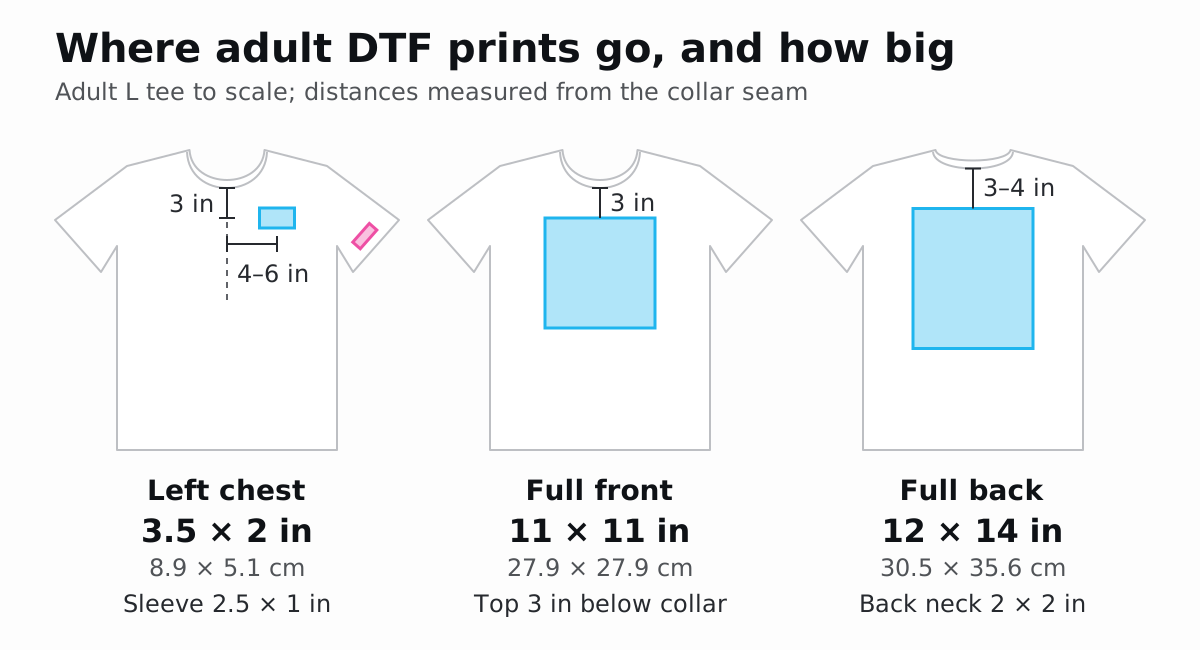
For an adult T-shirt, make a left chest logo 3.5–4 in (8.9–10.2 cm) wide, a full front 10–12 in (25.4–30.5 cm) wide starting 3 in (7.6 cm) below the collar, and a full back 12 × 14 in (30.5 × 35.6 cm). Youth fronts run 7–9 in, toddler 5–6.5 in, baby bodysuits 3.5–5.5 in and cap fronts 4–5 × 1.75–2.25 in. One transfer for a whole run must fit its smallest garment.
| Placement | Adult | Youth | Toddler · baby | Change it when |
|---|---|---|---|---|
| Left chest | 3.5–4 in (8.9–10.2 cm) wide | 2.5–3.5 in (6.4–8.9 cm) | about 2.4 in (6 cm) | Pocket tee: logo above the pocket, or under 3 × 3 in (7.6 cm) on it |
| Full front | 10–12 in (25.4–30.5 cm) wide; 11 × 11 in (27.9 cm) typical | 7–9 in (17.8–22.9 cm) | 5–6.5 in (12.7–16.5 cm) · 3.5–5.5 in (8.9–14.0 cm) | Hoodie: the pouch pocket caps the height. Women’s fitted: about 9 × 9 in (22.9 cm) |
| Full back | 12 × 14 in (30.5 × 35.6 cm) | 10 × 12 in (25.4 × 30.5 cm) | — | Hoodie: start below the hood’s resting edge |
| Oversized | 13 × 15 in (33.0 × 38.1 cm), up to 15 in wide | 10 × 12 in (25.4 × 30.5 cm) | — | Over about 14 × 14 in (35.6 cm): too big for a 15 × 15 in platen |
| Back neck | 2 × 2 in (5.1 cm) | 1.5 × 1.5 in (3.8 cm) | — | Neck label inside the collar: 2–3 in (5.1–7.6 cm) |
| Short sleeve | 2.5 × 1 in (6.4 × 2.5 cm) | 1.5 × 1 in (3.8 × 2.5 cm) | — | Long sleeve: 1–2 in wide, up to 14 in (35.6 cm) down the arm |
| Cap front | 4–5 × 1.75–2.25 in (10.2–12.7 × 4.4–5.7 cm) | — | — | Low-profile cap: 4 × 1.75 in (10.2 × 4.4 cm) |
A dash means no guide below publishes a size for that group. The sizes come from transfer makers’ and decorators’ guides, checked against the maxima that garment makers and print platforms publish. Centimetres are inches × 2.54, rounded to the nearest millimetre; the sheet maths uses exact millimetres. A supplier’s template or your press limit overrides any chart.
What size should a left chest logo be?
A left chest logo is usually 3.5–4 in (8.9–10.2 cm) wide. Ninja Transfers, a DTF transfer maker, publishes a 2.5–4.5 in range for width and height and an adult average of 3.5 × 2 in (8.9 × 5.1 cm); ScreenPrinting.com uses the same standard with a 4.5 in (11.4 cm) maximum width. Metric guides agree: Stahls’ UK and Siser both use 9 × 9 cm (3.5 in). Stahls’ gives 5 × 5 in (12.7 cm) as the imprint area and Printful a 2.5–5 in range, so treat 5 in as the ceiling rather than the target.
A wide wordmark follows the 3.5 × 2 in average and can reach 4–4.5 in (10.2–11.4 cm) wide at that height; a square or round badge follows the 9 × 9 cm square. Youth logos average 2.5 × 1.5 in (6.4 × 3.8 cm) in Ninja’s guide, and Stahls’ UK uses 6 × 6 cm (2.4 in) for toddler and baby garments.
Three garments move the logo rather than resize it:
- Pocket tees: above the pocket; on the pocket itself, under 3 × 3 in (7.6 cm) (Ninja).
- Polos: T-shirt distances, lined up with the point where the collar meets the shoulder seam (Stahls’).
- Jackets: 3.5–4 in (8.9–10.2 cm) from the zip and 6–8 in (15.2–20.3 cm) below the shoulder seam (Stahls’).
How big should a full front print be?
The standard adult full front is 10–12 in (25.4–30.5 cm) wide, and 11 × 11 in (27.9 cm) is the most common single size: Ninja’s average and ScreenPrinting.com’s standard, which allows up to 12 in wide and 11–16 in (27.9–40.6 cm) tall. Ninja’s height range is 10–14 in (25.4–35.6 cm).
Larger numbers are platform maxima or oversized styles, not everyday targets:
| Published limit | Size | Applies to |
|---|---|---|
| Stahls’ maximum imprint area | 12 × 14 in (30.5 × 35.6 cm) | Full front and full back, adult tees |
| Printful standard front area | 12 × 16 in (30.5 × 40.6 cm) | Most Printful T-shirts |
| Printful large front area | 15 × 18 in (38.1 × 45.7 cm) | Bella+Canvas 3001 and 3413, L and up; Cotton Heritage MC1082, M and up |
| Printful Bella+Canvas 3001, smaller sizes | 11.5 × 13.8 in (29.2 × 35.1 cm) | Bella+Canvas 3001, M, S and XS; check other products’ File guidelines |
| Ninja oversized front or back | 12–15 × 14–16 in (30.5–38.1 × 35.6–40.6 cm) | Anything bigger than a standard full front or back |
A centre chest print across the upper chest averages 8 × 4 in (20.3 × 10.2 cm) in Ninja’s guide; Siser’s example is 25 cm wide × 10 cm tall (9.8 × 3.9 in). For women’s fitted tees Ninja recommends about 9 × 9 in (22.9 cm).
For plus sizes, Ninja’s FAQ moves from 11 × 11 in (S–2XL) to 12 × 14 in (30.5 × 35.6 cm) or larger for 3XL–5XL, and ScreenPrinting.com scales XXL and up by up to 15 % and lowers the print to 2.75–3.75 in (7.0–9.5 cm) below the collar. Check the press first: most standard platens are 15 × 15 in with about 14 × 14 in (35.6 cm) usable, and prints near 15 × 18 in need a 16 × 20 in press (Ninja).
What size is a back print?
A full back is usually 12 × 14 in (30.5 × 35.6 cm): Ninja’s average (11–13 in wide, 13–15 in tall) and ScreenPrinting.com’s standard, which allows up to 13 × 16 in (33.0 × 40.6 cm). Its top sits 3–4 in (7.6–10.2 cm) below the back collar in ScreenPrinting.com’s guide, about 4 in in Ninja’s and 2–3 in (5.1–7.6 cm) in Stahls’. Printful’s back maxima run from 10 × 12 in to 12 × 16 in, depending on the product.
- Upper back, across the shoulders: 12 × 4 in (30.5 × 10.2 cm) on average, 10–14 in wide, about 4 in (10.2 cm) below the collar (Ninja); Stahls’ allows a 14 × 4 in (35.6 × 10.2 cm) area.
- Back neck or yoke: 2 × 2 in (5.1 cm) on average, 1–3 in range, 1–2 in (2.5–5.1 cm) below the back collar seam (Ninja; ScreenPrinting.com uses 2.5 × 2.5 in).
- Locker patch: 4 × 4 in (10.2 cm) just below the neckline (Stahls’); Siser uses 10 × 10 cm (3.9 in), 4 cm (1.6 in) down.
On jackets, Stahls’ measures 6–9 in (15.2–22.9 cm) from the collar seam to the design’s centre. On hoodies, start the back print below the hood’s resting edge.
What size are sleeve, pocket and hoodie prints?
A short sleeve print averages 2.5 × 1 in (6.4 × 2.5 cm) in Ninja’s guide (range 1–3.5 in), placed about 1 in (2.5 cm) above the hem in ScreenPrinting.com’s. Larger figures are areas, not typical prints: Stahls’ 3.5 × 3.5 in (8.9 cm), Siser’s 8.5 × 8.5 cm (3.3 in) and Printful’s usual 4 × 3.5 in (10.2 × 8.9 cm) maximum. Youth sleeves average 1.5 × 1 in (3.8 × 2.5 cm).
A long sleeve print runs down the arm: 1–2 in (2.5–5.1 cm) across and up to 14 in (35.6 cm) long, ending about 3.5 in (8.9 cm) above the cuff (ScreenPrinting.com). SpeedE Transfers’ examples are 2.5 × 11 in (6.4 × 27.9 cm) for adults and 2 × 7–9 in (5.1 × 17.8–22.9 cm) for youth.
A hoodie front is limited by the pouch pocket. Printful’s hoodie guide puts full-front designs at 10–12 in (25.4–30.5 cm) wide. DTF Runner, a transfer printer, starts the print 3–3.5 in (7.6–8.9 cm) below the collar, suggests 8–9 in (20.3–22.9 cm) of height and leaves at least 1 in (2.5 cm) above the pocket seam. Work the height out from the garment:
maximum print height = collar seam to top of pocket − 3 in below the collar − 1 in above the pocketIf the pocket starts 12 in (30.5 cm) below the collar seam, 12 − 3 − 1 = 8 in (20.3 cm) remains. Measure the smallest hoodie in the run, since a one-size transfer must clear the pocket on every size. On zip hoodies, keep prints off the zip and use the left and right chest.
What size DTF transfer for youth, toddler and baby clothes?
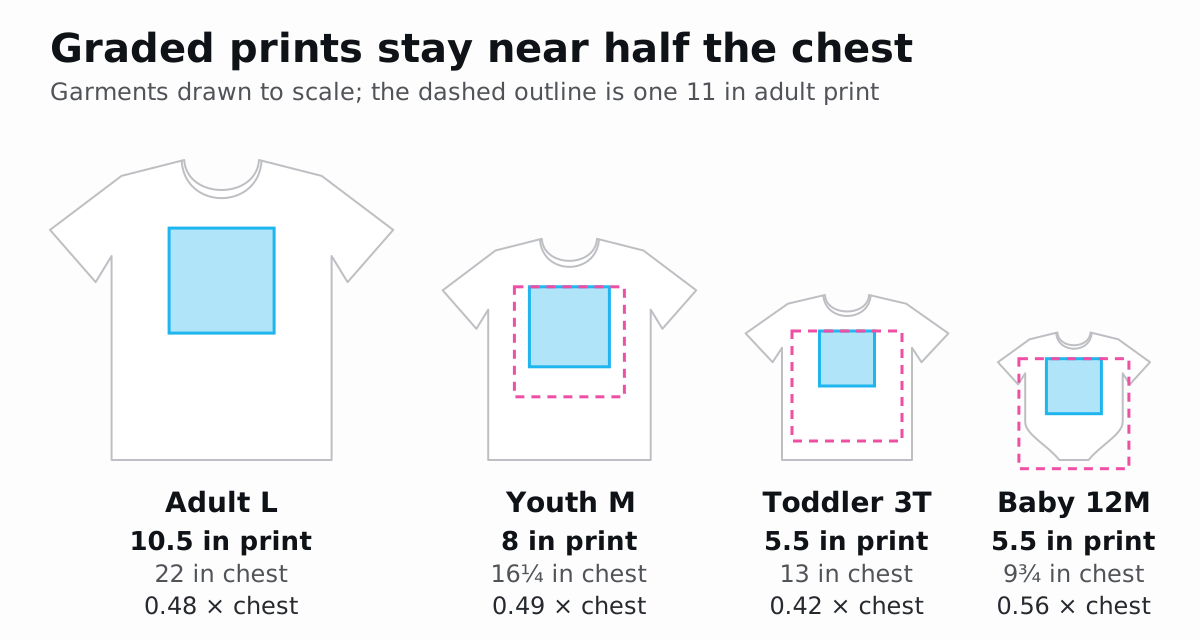
Kids’ garments are where a fixed adult transfer fails. Laid flat, a Bella+Canvas youth medium tee measures 16¼ in (41.3 cm) across the chest, a 2T toddler tee 12 in (30.5 cm) and a newborn Rabbit Skins bodysuit 7¼ in (18.4 cm), against 22 in (55.9 cm) for an adult large. The charts shrink with the garment:
| Group | Chest laid flat (garment maker) | Front print width | Left chest | Top of print below collar |
|---|---|---|---|---|
| Youth XS–XL | 15¼–18¼ in (38.7–46.4 cm), Bella+Canvas 3001Y, YS–YXL | 7–9 in (17.8–22.9 cm) | 2.5–3.5 in (6.4–8.9 cm) | 2–2.5 in (5.1–6.4 cm) |
| Toddler 2T–5T | 12–15 in (30.5–38.1 cm), Bella+Canvas 3001T | 5–6.5 in (12.7–16.5 cm) | about 2.4 in (6 cm) | 1.5 in (3.8 cm) |
| Baby bodysuit NB–24M | 7¼–11¾ in (18.4–29.8 cm), Rabbit Skins 4400 | 3.5–5.5 in (8.9–14.0 cm) | about 2.4 in (6 cm) | 1 in (2.5 cm) |
Front widths follow SpeedE Transfers’ chart, which uses half-inch steps for youth sizes: youth XS 7 in to XL 9 in, toddler 2T 5 in to 5T 6–6.5 in, baby 0–3 months 3.5 in to 12 months 5.5 in. Collar distances are DTF Jersey’s (ScreenPrinting.com gives 2–2.5 in for youth); left chest sizes are Ninja’s (youth) and Stahls’ UK’s (toddler and baby). ScreenPrinting.com scales adult sizes down by roughly 15–20 % for youth, and Ninja’s youth full front averages 9 × 9 in (22.9 cm), with 8 × 8 in (20.3 cm) in its FAQ. Ninja’s scaling guide caps toddler prints at about 6 × 8 in (15.2 × 20.3 cm).
Height matters more as the garment shrinks: Rabbit Skins’ bodysuit is only 10¾–14¾ in (27.3–37.5 cm) long from newborn to 24 months, and SpeedE warns against letting the design enter the snap or fold areas. Rabbit Skins’ published print area, 6¼ in (15.9 cm) wide on the smallest size and 10¾ in (27.3 cm) on the largest, is the flat panel: a maximum, not a design size.
What size transfer fits a hat, tote bag or apron?
On a cap the limit is height. Every cap area in the table stays at or under 2.25 in (5.7 cm) tall, since the front panel is short, curved and ends at the brim; the width changes less.
| Item | Published decoration area (W × H) | Published by |
|---|---|---|
| Low-profile cap, front panel | 4 × 1.75 in (10.2 × 4.4 cm) | Stahls’ |
| Mid-profile cap, front panel | 5 × 2 in (12.7 × 5.1 cm) | Stahls’ |
| High-profile cap, front panel | 5 × 2.25 in (12.7 × 5.7 cm) | Stahls’ |
| Visor, front | 5 × 1.5 in (12.7 × 3.8 cm) | Stahls’ |
| Cap on Cricut’s Hat Press | up to 4.25 × 2.25 in (10.8 × 5.7 cm) | Cricut |
| Trucker cap / dad cap transfer | 4.5 × 2.25 in (11.4 × 5.7 cm) / 4 × 2 in (10.2 × 5.1 cm) | SpeedE Transfers |
| Canvas tote, 15 × 16 in bag | 10 × 12 in (25.4 × 30.5 cm) | Q-Tees, Q800 |
| Canvas tote, 14.5 × 15.5 in bag | 13 × 12.5 in (33.0 × 31.8 cm) | Liberty Bags, 8502 |
| Full-length apron, 22 × 30 in | 10 × 12 in (25.4 × 30.5 cm) | Q-Tees, Q4350 |
Stahls’ crown heights rise from 3.13 in (low profile) to 3.50 in (mid) and 3.75 in (high), and the front-panel height rises with them from 1.75 to 2.25 in; its side and back panels take prints only 1 in (2.5 cm) tall. Press caps on a curved hat platen or hat press; the heat press settings by fabric cover caps.
Bag and apron makers publish an imprint area for each product, and they draw it differently: the two totes above are almost the same size, yet list 10 × 12 in and 13 × 12.5 in. Keep the print on the flat panel, clear of seams, gussets, handle stitching and apron pockets, and start from the smaller figure on an unfamiliar bag.
Where exactly does each print go?
Measure down from the bottom of the collar seam to the top edge of the design, and across from the centre line (fold the garment lengthwise to find it). Guides differ mostly because they measure to different points, so record which one you used.
| Placement | Measured from → to | Distance | Published by |
|---|---|---|---|
| Adult full front | Collar seam → top of design | 3 in (7.6 cm); 3–3.5 in (7.6–8.9 cm); 3–4 in (7.6–10.2 cm) | Ninja and ScreenPrinting.com; Stahls’; Printful |
| Youth front | Collar seam → top of design | 2–2.5 in (5.1–6.4 cm) | ScreenPrinting.com; DTF Jersey (2 in) |
| Toddler · baby front | Collar seam → top of design | 1.5 in (3.8 cm) · 1 in (2.5 cm) | DTF Jersey |
| Left chest | Collar → logo; centre line → logo | about 3 in (7.6 cm) down; 4–6 in (10.2–15.2 cm) across | Ninja |
| Left chest, to the logo’s centre | Collar → centre of logo; centre line → logo | 2.5–3 in (6.4–7.6 cm) down; 3.5–4 in (8.9–10.2 cm) across | ScreenPrinting.com |
| Left chest, from the shoulder | Left shoulder seam → centre of logo | 7.5–9 in (19.1–22.9 cm) | Stahls’ placement sheet; its UK guide gives 14–20 cm (5.5–7.9 in) |
| Full back | Back collar seam → top of design | 3–4 in (7.6–10.2 cm) | ScreenPrinting.com; Ninja (about 4 in) |
| Back neck | Back collar seam → top of design | 1–2 in (2.5–5.1 cm) | Ninja; ScreenPrinting.com |
| Short sleeve | Hem → bottom of design | about 1 in (2.5 cm) | ScreenPrinting.com |
| Long sleeve | Cuff → bottom of design | about 3.5 in (8.9 cm) | ScreenPrinting.com |
| Hoodie or sweatshirt front | Collar seam → top of design | 3–3.5 in (7.6–8.9 cm), at least 1 in (2.5 cm) above a pouch pocket | Stahls’ (sweatshirts); DTF Runner |
Ninja’s “four fingers below the collar” is a ruler-free 3 in. For repeat work, put the same placement ruler or printed template in the same spot on every garment and note the distance on the job sheet.
One transfer size for the whole run, or graded sizes?
Print platforms default to one size. Custom Ink prints the same design dimensions on every item in an order, so a design looks larger on youth shirts and smaller on plus sizes. Printful does not scale by garment size as a rule; the main exception is its 15 × 18 in front area, shrunk to 11.5 × 13.8 in on smaller sizes, where a 10 in design prints at 10 × 11.5 ÷ 15 ≈ 7.7 in (19.5 cm). Transfer makers lean the other way: Ninja recommends one size version per range of garment sizes, scaled down from the largest at the same print-to-garment ratio, and SpeedE publishes separate widths for each size.
The deciding number is the fabric left on each side of the print, (chest laid flat − print width) ÷ 2, using the garment maker’s chest measurement:
| Garment (chest laid flat) | 11 in (27.9 cm) front | 8 in (20.3 cm) front | 6 in (15.2 cm) front |
|---|---|---|---|
| Adult S, 18 in (45.7 cm) | 3.5 in (8.9 cm) each side | 5 in (12.7 cm) | 6 in (15.2 cm) |
| Youth M, 16¼ in (41.3 cm) | 2.6 in (6.7 cm) | 4.1 in (10.5 cm) | 5.1 in (13.0 cm) |
| Toddler 3T, 13 in (33.0 cm) | 1 in (2.5 cm) | 2.5 in (6.4 cm) | 3.5 in (8.9 cm) |
| Baby 12M, 9¾ in (24.8 cm) | wider than the garment | 0.9 in (2.2 cm) | 1.9 in (4.8 cm) |
An adult front on a toddler tee leaves a single inch to each side seam, which is why every chart drops to 5–6.5 in for toddlers. The graded charts sit near half the chest width: SpeedE’s 10.5 in on a 22 in adult L is 0.48 of it, 8 in on a 16¼ in youth M 0.49, 5.5 in on a 13 in toddler 3T 0.42 and 5.5 in on a 9¾ in 12-month bodysuit 0.56.
Choose the number of size versions from what the run contains:
| The run contains | Size versions | Example from the guides |
|---|---|---|
| One adult style, S–XL | 1 | 11 × 11 in (27.9 cm); SpeedE grades S–XL from 9.5 to 11 in |
| Adult S–5XL | 2 | 11 × 11 in for S–2XL, 12 × 14 in (30.5 × 35.6 cm) for 3XL–5XL (Ninja) |
| Adults and youth | 2–3 | Add 8 × 8 in (20.3 cm) youth and 9 × 9 in women’s fitted (Ninja) |
| Babies to adults | 4 or more | Baby 3.5–5.5, toddler 5–6.5, youth 7–9, adult 10–12 in |
One size is simpler to print, sort and press, at the cost of a smaller look on 2XL than on S. Graded versions mean more files, but the smaller ones use less film and often fill gaps beside the large ones.
How do you check a size before you print the sheet?
- Measure the smallest and largest garment in the run. Lay each flat and measure the chest 1 in (2.5 cm) below the armholes, as Bella+Canvas does, plus collar-to-pocket on hoodies and the flat panel on caps and totes.
- Trim the artwork to its visible edges. The transfer size is the size of the printed art; transparent padding shrinks the art inside the ordered size. Check pixels at that size: width in inches × 300, so an 11 in front needs 3,300 px (see the pixel size chart for DTF).
- Print a paper proof at 100 % with “fit to page” switched off, and check one dimension with a ruler.
- Lay the proof on both garments at the planned collar distance. Check the side clearance with the formula above, and that nothing crosses a seam, pocket, zip, snap or hem.
- Check the press. The platen must cover the print with room around it (a 15 × 15 in platen gives about 14 × 14 in usable); caps need a curved hat platen or hat press.
- Press one transfer of each size version before the run and measure it on the garment: the width should match the order and the clearance the proof. For a scale check from file through RIP to film, run a DTF test file first.
Keep sizes, distances and reference points on the job sheet; a reorder then starts at step 6.
How many of each size fit across a 22 in, 24 in or 600 mm sheet?
Once sizes are fixed, the sheet is arithmetic. The DTF gang sheet size chart covers sheet and roll sizes; here the question is how these garment sizes behave on 22 in (558.8 mm), 24 in (609.6 mm) and 600 mm. Every number uses a 2 mm gap and 5 mm margin, NestSheet’s defaults, on all three widths so they compare fairly. A supplier’s fixed 22 in or 24 in sheet may reserve other margins; the gap and margin guide explains how to choose yours.
columns = floor((roll width − 2 × margin + gap) ÷ (design width + gap))
rows    = floor((sheet length − 2 × margin + gap) ÷ (design height + gap))
designs = columns × rows
Worked example: 11 × 11 in fronts (279.4 mm square).
- On the 600 mm roll, the space the columns share is 600 − 2 × 5 + 2 = 592 mm, and each design takes 279.4 + 2 = 281.4 mm. 592 ÷ 281.4 = 2.10, so 2 columns.
- On a 22 in sheet the same space is 558.8 − 10 + 2 = 550.8 mm. 550.8 ÷ 281.4 = 1.96, so 1 column.
- Down 1,000 mm of film: (1,000 − 10 + 2) ÷ 281.4 = 992 ÷ 281.4 = 3.53, so 3 rows.
- Result: 2 × 3 = 6 fronts per 1,000 mm on the 600 mm roll, and 1 × 3 = 3 on 22 in.
The same formula gives the counts below. Rows depend only on the length, so the three per-1,000 mm figures differ only through the column count; the last column is a supplier-style 22 × 60 in sheet (1,524 mm long).
| Transfer, W × H | Across: 22 in · 24 in · 600 mm | Per 1,000 mm of film: 22 in · 24 in · 600 mm | Per 22 × 60 in sheet |
|---|---|---|---|
| Back neck 2 × 2 in (50.8 mm) | 10 · 11 · 11 | 180 · 198 · 198 | 280 |
| Left chest 3.5 × 2 in (88.9 × 50.8 mm) | 6 · 6 · 6 | 108 · 108 · 108 | 168 |
| Left chest 4 × 4 in (101.6 mm) | 5 · 5 · 5 | 45 · 45 · 45 | 70 |
| Cap front 4.5 × 2.25 in (114.3 × 57.15 mm) | 4 · 5 · 5 | 64 · 80 · 80 | 100 |
| Toddler front 6 × 6 in (152.4 mm) | 3 · 3 · 3 | 18 · 18 · 18 | 27 |
| Youth front 8 × 8 in (203.2 mm) | 2 · 2 · 2 | 8 · 8 · 8 | 14 |
| Adult front 11 × 11 in (279.4 mm) | 1 · 2 · 2 | 3 · 6 · 6 | 5 |
| Full back 12 × 14 in (304.8 × 355.6 mm) | 1 · 1 · 1 | 2 · 2 · 2 | 4 |
| Oversized 13 × 15 in (330.2 × 381 mm) | 1 · 1 · 1 | 2 · 2 · 2 | 3 |
To plan from the other direction, this is the widest design that still fits a given number across, (roll width − 2 × margin + gap) ÷ N − gap, rounded down so the listed width really fits:
| Designs across | 22 in (558.8 mm) | 24 in (609.6 mm) | 600 mm |
|---|---|---|---|
| 2 | 273.4 mm (10.76 in) | 298.8 mm (11.76 in) | 294.0 mm (11.57 in) |
| 3 | 181.6 mm (7.14 in) | 198.5 mm (7.81 in) | 195.3 mm (7.69 in) |
| 4 | 135.7 mm (5.34 in) | 148.4 mm (5.84 in) | 146.0 mm (5.74 in) |
| 5 | 108.1 mm (4.25 in) | 118.3 mm (4.65 in) | 116.4 mm (4.58 in) |
| 6 | 89.8 mm (3.53 in) | 98.2 mm (3.86 in) | 96.6 mm (3.80 in) |
Four results are worth knowing before you size the artwork:
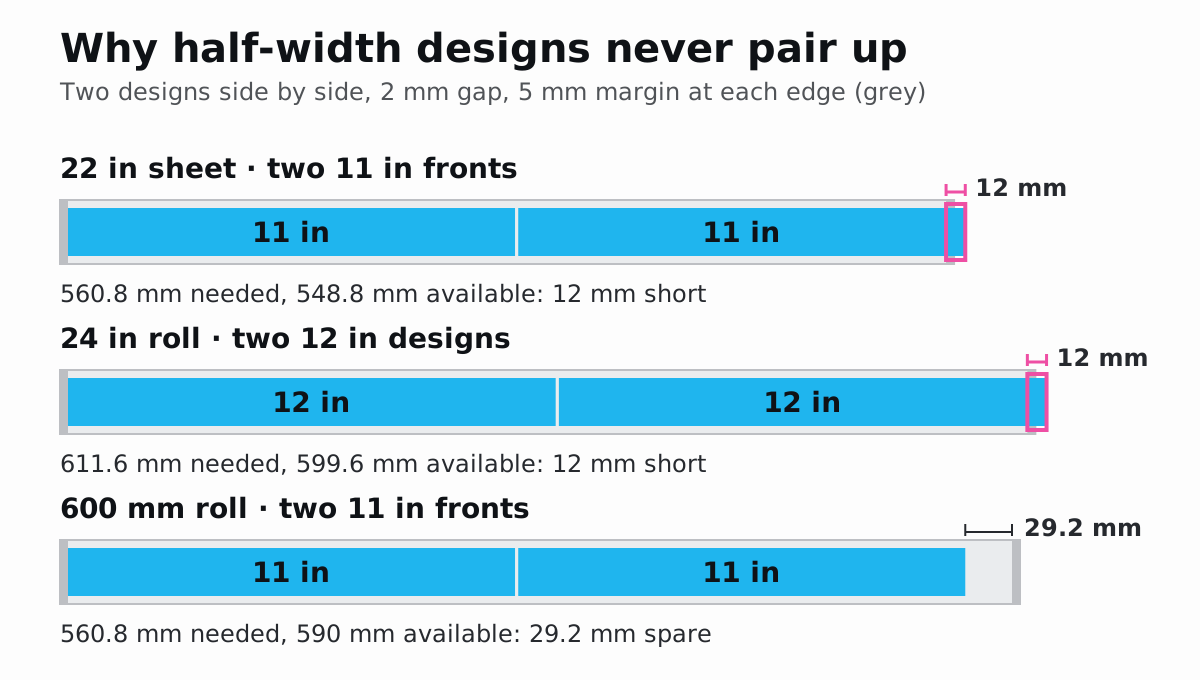
- A design half the sheet width never pairs up. Two 11 in fronts need 279.4 + 2 + 279.4 = 560.8 mm; a 22 in sheet has 548.8 mm inside its margins. Two 12 in designs need 611.6 mm; a 24 in roll has 599.6 mm, and even its full 609.6 mm is short. Both miss by exactly 12 mm, the gap plus both margins, while a 600 mm roll fits the 11 in pair with 29.2 mm spare. An “11 in” front sized at 10.75 in (273.05 mm) goes two across 22 in.
- 24 in and 600 mm behave almost alike. The 24 in roll is 9.6 mm wider and gives every size in the first table the same columns. Only near the limits do they differ: a 3.85 in (97.8 mm) design goes six across on 24 in, five on 600 mm.
- Turning pieces 90° can add pieces. Turned on their side, cap fronts go nine across 22 in and fill a 22 × 60 in sheet with 117 instead of 100. A full back turned to 14 × 12 in gives 3 per 1,000 mm instead of 2, and an oversized print turned gives 4 per 22 × 60 in sheet instead of 3. Turned 3.5 × 2 in left chests give 110 per 1,000 mm on 24 in or 600 mm instead of 108, but only 100 on 22 in, so test both orientations.
- Mixed sizes fill the strips. A 22 in sheet cannot take two adult fronts side by side, but it takes an adult and a youth front: 279.4 + 2 + 203.2 = 484.6 mm of its 548.8 mm.
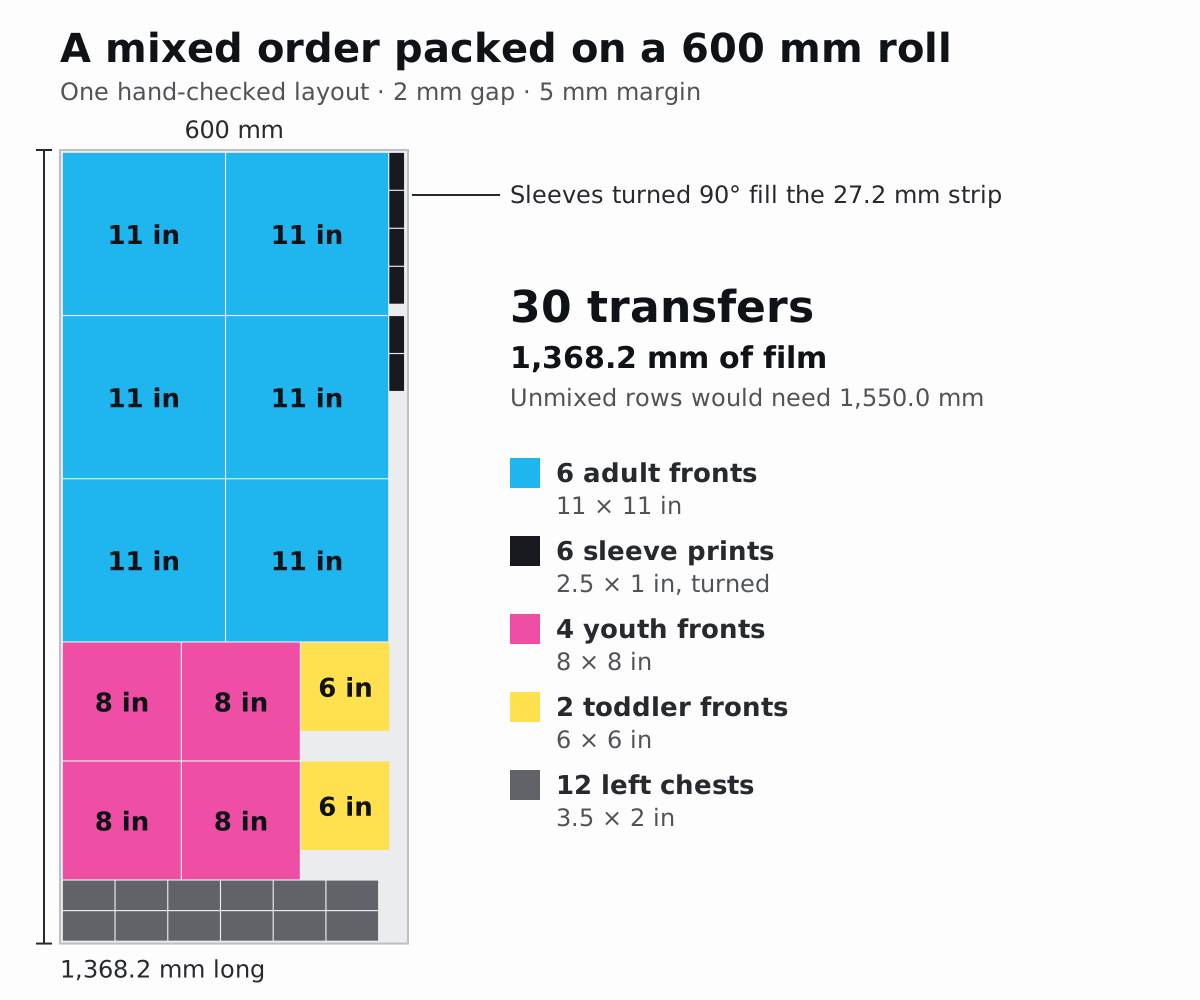
So a grid of one size in one orientation is a lower bound; the DTF gang sheet software comparison shows how each layout tool packs mixed sizes. A real order mixes sizes; this club order fills a 600 mm roll with 6 adult tees (11 × 11 in front plus a 2.5 × 1 in sleeve print), 4 youth tees at 8 × 8 in, 2 toddler tees at 6 × 6 in and 12 polos with a 3.5 × 2 in left chest, 30 transfers in all.
- Rows 1–3: two adult fronts per row use 560.8 mm of the 590 mm between the margins. After one more gap, the 27.2 mm strip on the right takes the sleeve prints turned 90° (25.4 mm wide, 63.5 mm long): four beside the first pair, two beside the second.
- Rows 4–5: two youth fronts and a toddler front use 203.2 + 2 + 203.2 + 2 + 152.4 = 562.8 mm.
- Rows 6–7: six left chests use 6 × 88.9 + 5 × 2 = 543.4 mm.
- Length: 5 + 3 × 279.4 + 2 × 203.2 + 2 × 50.8 + 6 × 2 + 5 = 1,368.2 mm for all 30 transfers. Giving each design its own rows (nine rows) needs 1,550.0 mm.
In NestSheet a new sheet starts with exactly these settings: a 600 mm roll, 2 mm gap, 5 mm margin and automatic height, with roll-width presets from 300 to 1800 mm. Upload one transparent PNG per size version, set each file’s print dimensions and copy count, and Auto-nest packs the mixed sizes on their rectangular bounds, turning pieces 0° or 90°; compare its layout with the grid counts above. To see the club order packed rather than calculated, lay out a mixed-size gang sheet with Auto-nest.
Sources
- Ninja Transfers, The Ultimate DTF Transfer Placement Guide: https://ninjatransfers.com/pages/dtf-transfer-placement-guide
- Ninja Transfers, Frequently Asked Questions (transfer sizes by garment) and How To Scale DTF Designs For Larger Garments: https://ninjatransfers.com/a/faq ; https://ninjatransfers.com/pages/how-to-scale-dtf-designs-for-larger-garments
- Stahls’, Heat Printing Placement Tips (PDF), How to Size T-Shirt Designs and A Heat Printing Guide to Left Chest T-shirt Placement (UK): https://assets.stahls.com/stahls/content/pdf/education/Heat_Printing_Placement_Tips.pdf ; https://blog.stahls.com/t-shirt-design-sizes/ ; https://www.stahls.co.uk/blog/a-heat-printing-guide-to-left-chest-tshirt-placement.html
- Siser, How to place and size Siser HTV on your t-shirt: https://www.siser.com/how-to-place-and-size-siser-htv/
- ScreenPrinting.com, DTF Transfer Placement Guide: Sizes, Tools, and Pro Tips: https://www.screenprinting.com/blogs/news/dtf-transfer-placement-guide
- SpeedE Transfers, DTF Transfer Size Chart: https://speedetransfers.com/dtf-transfer-size-chart/
- DTF Jersey, The Ultimate Guide to DTF Transfer Sizes and Placement: Toddler to 3XL: https://dtfjersey.com/blogs/dtf-transfer/dtf-transfer-sizes
- DTF Runner, DTF Design Size & Placement Guide: https://www.dtfrunner.com/pages/dtf-design-size-placement-guide
- Printful, T-shirt design placement guide and Hoodie logo placement guide: https://www.printful.com/blog/t-shirt-design-placement-guide ; https://www.printful.com/blog/hoodie-logo-placement-guide
- Printful Help Center, How is my design scaled for different garment sizes? and the standard 15″ × 18″ print placement for DTG products: https://help.printful.com/hc/en-us/articles/20835112874908-How-is-my-design-scaled-for-different-garment-sizes ; https://help.printful.com/hc/en-us/articles/18532732956828-What-should-I-know-about-the-new-standard-print-placement-for-select-DTG-products
- Custom Ink Help Center, How your design will look on different sized shirts: https://www.customink.com/help_center/designs-on-different-sizes
- Bella+Canvas, measurement specifications for 3001, 3001Y and 3001T: https://www.bellacanvas.com/spec/3001%20specs.pdf ; https://www.bellacanvas.com/product/3001Y/Youth-Jersey-Short-Sleeve-Tee.html ; https://www.bellacanvas.com/product/3001T/Toddler-Short-Sleeve-Tee.html
- LAT Apparel, Rabbit Skins 4400 Infant Baby Rib Bodysuit (finished measurements and print area): https://www.latapparel.com/product/4400/Infant-Baby-Rib-Bodysuit.html
- Cricut Help, Iron-On Basics with Cricut Hat Press: https://help.cricut.com/hc/en-us/articles/4416291349143-Iron-On-Basics-with-Cricut-Hat-Press
- Q-Tees, Q800 canvas tote and Q4350 full-length apron product specifications; Liberty Bags 8502 tote (distributor listing): https://qtees.com/product/heavy-canvas-promotional-tote-bag-q800/ ; https://qtees.com/product/full-length-apron-with-2-patch-pocketsq4350/ ; https://www.blankstyle.com/liberty-bags-8502-branson-bargain-canvas-tote